In the annals of Indian cinema, few names shimmer with the quiet brilliance of Charu Roy. He wasn’t just a filmmaker. He was a visionary, a painter, a cartoonist, an actor, and a cultural architect whose legacy […]
In the annals of Indian cinema, few names shimmer with the quiet brilliance of Charu Roy. He wasn’t just a filmmaker. He was a visionary, a painter, a cartoonist, an actor, and a cultural architect whose legacy deserves far more spotlight than history has afforded him. This tribute is not just a recollection—it’s a celebration of a man who shaped the soul of Indian visual storytelling.
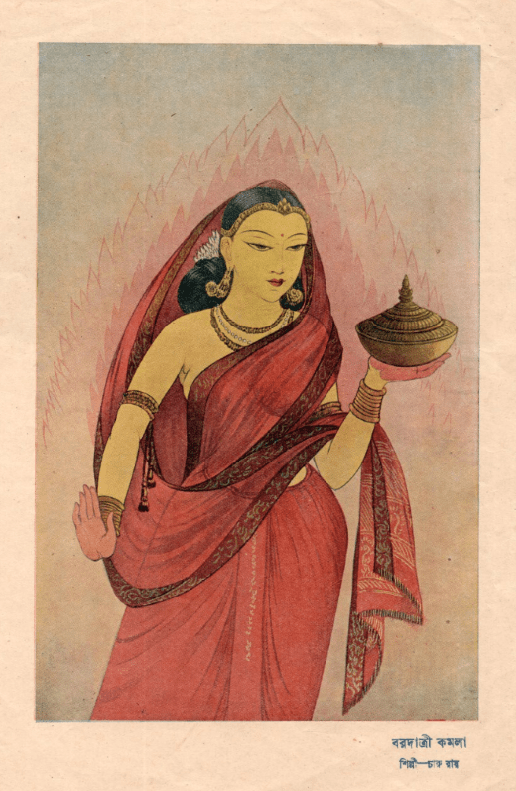
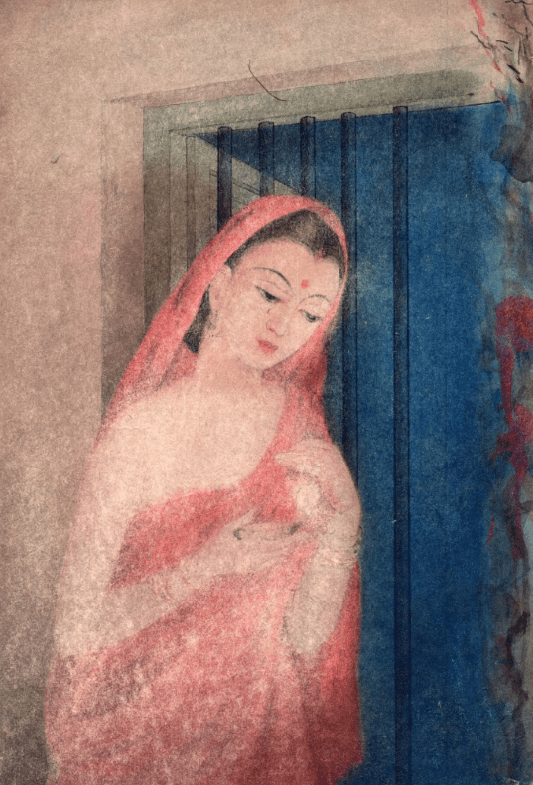
Born on September 6, 1890, in Berhampur, Murshidabad, Charu Roy’s journey began not in studios or sets, but in the world of fine art. Trained under the local sculptor Broja Pal, and later under the legendary Abanindranath Tagore, Roy’s artistic lineage placed him among the greats of the Bengal School of Painting. His contemporaries included Nandalal Bose, Jamini Roy, and Ramkinkar Baij—names that defined Indian modernism. Despite earning a B.Sc. from Presidency College, Roy’s heart belonged to the canvas. His paintings, such as Mother (1941), Karna-Kunti, Call of the Woods, and Dance of Urvashi, were not mere visuals—they were philosophical meditations, cultural commentaries, and emotional landscapes. His adoption of the Kalighat style in wash and tempera was a nod to tradition, yet uniquely his own.
Before cinema claimed him, Charu Roy made waves as a cartoonist. His illustrations graced the pages of Bharatbarsha and Prabasi, and he became the first educational cartoonist for Ananda Bazar Patrika. Signing his work as “C.R.”, Roy’s cartoons were witty, insightful, and socially aware. His cover designs for the Bengali magazine Amrita and book illustrations for authors like Narendra Deb and Radharani Devi showcased his versatility and depth.
Roy’s artistic journey naturally led him to the stage, where he revolutionized set design. He introduced third-dimensional stage settings in Sisir Bhaduri’s production of Sita, a move that transformed Bengali theatre. His understanding of space, light, and mood made him a sought-after art director, and his work in films like Malancha remains exemplary. He had also been credited as the costume designer of the 1925 film ‘Prem Sanyas’ directed by Franz Osten.
Charu Roy’s foray into cinema was nothing short of historic. He was part of the silent film era, acting in classics like A Throw of Dice and Shiraz, directed by Franz Osten. His co-stars included Sita Devi, Devika Rani, and Himansu Rai. A Throw of Dice also known as Prapancha Pash, had him play the role of Prince Ranjit who falls in love with . In Shiraz, he played the role of prince Khurram, who later in life became the emperor Shah Jahan.
Roy wasn’t just an actor—he was also the art director, shaping the visual language of these films with precision and elegance. As a director, Roy created films that were ahead of their time. His silent films—Anarkali, Bigraha, Chorkanta, and Swami—were followed by talkies like Rajnati Basantasena, Bangalee, and Graher Fer. In Bangalee (1936), Roy dissected the Bengali middle-class family with such realism that Satyajit Ray himself praised the film’s authenticity and maturity. Ray once remarked, “There was no director who tried to capture the reality of the Anglo-Bengali way of life either. There was however one exception, that was Charu Roy.” Coming from the maestro of realism, this was no small compliment.
Charu Roy wasn’t just a filmmaker—he was a cultural chronicler. He was the first editor of India’s first cine magazine, Bioscope, and his writings reflected a deep understanding of cinema’s role in society. In the 1932 Puja issue of Filmland, Roy lamented the lack of star-driven films in Bengal, contrasting it with Hollywood’s celebrity culture. His insights were sharp, his critiques honest, and his vision expansive.
Roy’s creativity extended beyond the screen and canvas. He designed his own residence at 5A Deshapriya Park East, a space that reflected his aesthetic sensibilities. It wasn’t just a house—it was a manifestation of his artistic soul. Charu Roy’s life was filled with struggles and sacrifices. Financial constraints led him to work at Bird & Co. as a geologist, but his passion for art never waned. He worked extensively in the mining areas of Keonjhar, Odisha, yet continued to paint, act, and direct. His circle of friends included intellectuals like Sudhir Chandra Sircar, Tusharkanti Ghosh, Achintya Kumar Sengupta, and Ajita Mukherjee—a testament to his standing in Bengal’s cultural elite.
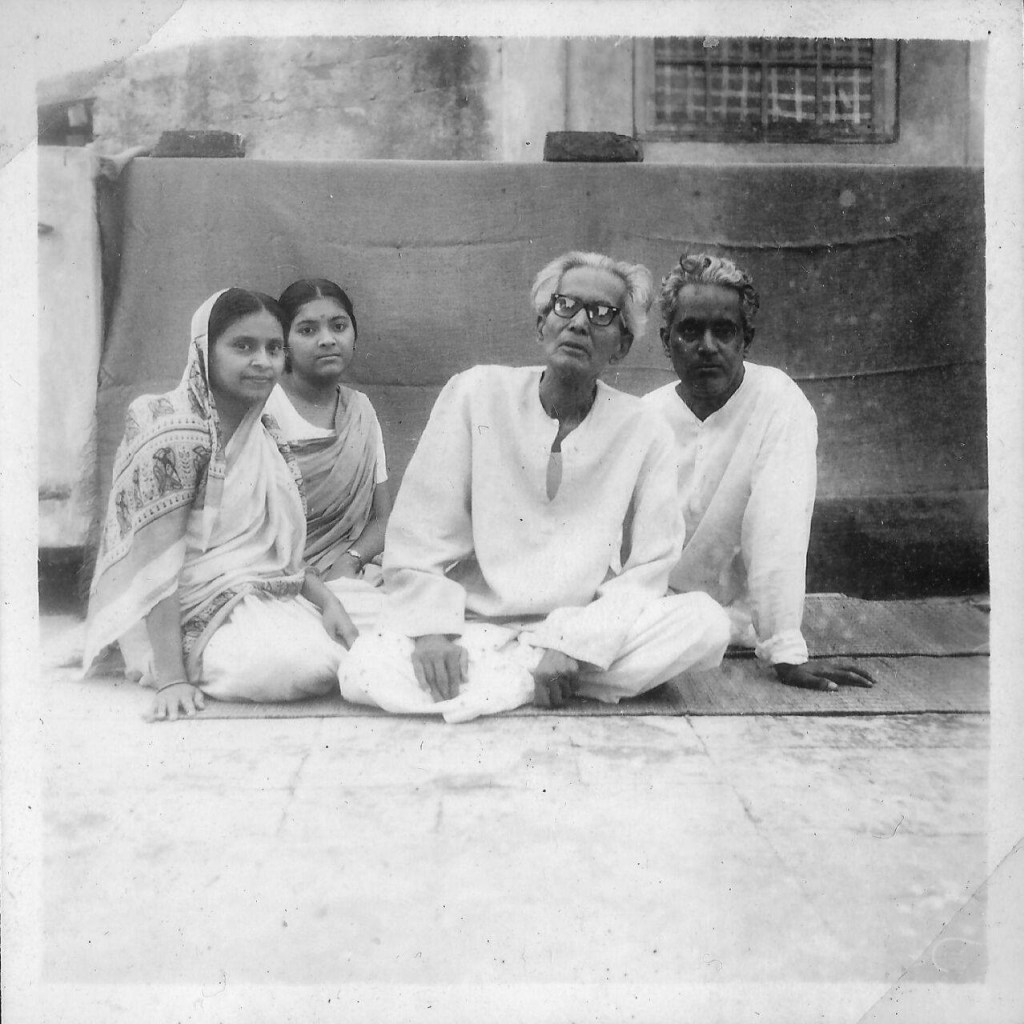
He married Maya Roy in 1919 and had a son, Mukul, born in 1923. Roy passed away on September 29, 1971, at the age of 81, survived by his granddaughter Ratnamala, who resides in Bhubaneswar, Odisha and is a celebrated architect herself. Charu Roy’s contribution to Indian cinema and art is immeasurable. He was a torchbearer of realism, a champion of indigenous aesthetics, and a pioneer of cinematic storytelling. His films, paintings, and writings continue to inspire, even if they remain under-appreciated by mainstream narratives. In his own words at the Festival of Silent Era Film Classics in 1970, Roy said, “They [silent films] stand in their own right for their artistic beauty.” This belief in the power of pure art defined his life and work.
As a learner of cinema, I stand in awe of Charu Roy—not just for what he created, but for how he lived. He chose art over comfort, truth over fame, and integrity over imitation. He was a man who painted with light, directed with soul, and lived with purpose.
Let us not allow his legacy to fade into the shadows of history. Let us remember, revisit, and revere the genius of Charu Roy. Because legends like him don’t just belong to the past—they belong to eternity.
Thank you Ashes for bringing this out-and with such p9pinsight . You really cannot limit his ac complishment in any one field because he was equally talented in many .
This chronicling and recognition was overdue and I am grateful that you brought it out . In in fu
Thank you very much for this piece. May I also add that this essay helped in validating the Wikipedia article too. Something I’ve been trying to get published for a very long time now.






 The Cinemawala
Thank you Ashes for bringing this out-and with such p9pinsight . You really cannot limit his ac complishment in any one field because he was equally talented in many .
This chronicling and recognition was overdue and I am grateful that you brought it out . In in fu
LikeLike
Thank you very much for this piece. May I also add that this essay helped in validating the Wikipedia article too. Something I’ve been trying to get published for a very long time now.
LikeLike